


Takeaways
- The variable that most affects the cost of an event is the time of year: in the months between May and September, strong demand drives up the prices of venues, artists and vendors, while holding the event in the low season often means better rates without giving up quality.
- The budget also depends on organizational choices such as the day of the week, the venue and the event format. Moving the date from a Saturday to a less sought-after day, choosing a more flexible space or defining precisely the kind of experience you want to create can significantly affect the final quote.
- A genuinely reliable quote comes from tailored planning that accounts for objectives, number of attendees, logistics, technical aspects and production. Only by examining all these variables together is it possible to turn the available budget into an investment that delivers a consistent, well-organized and high-impact event.
The most sought-after months push up the prices of spaces, artists and technical services, while a more flexible date can open room for savings without lowering the quality of the event
Before asking for a quote for your event, look at the calendar. Even though the final cost depends on many variables, seasonality is what sets the rules of the game.
Getting married in June or in February does not cost the same; organizing a convention in December follows completely different pricing dynamics than in March.
Mastering this mechanism gives you two big advantages: it lets you plan your budget with real clarity and gives you the power to negotiate the best terms.
Read also: Choose the music for your event before you choose the venue
Seasonality: the variable that rules them all
From May to September, demand for venues, vendors and artists peaks. Everyone wants to hold outdoor events, make the most of the good weather and give their guests a summer atmosphere. This means availability shrinks and prices rise, following the simplest logic of the market: when demand outstrips supply, cost goes up.
By contrast, the months between October and April (with the exception of the Christmas holidays, a busy period all the same) are a favorable window. Prestigious venues, established photographers, quality bands: many professionals offer more affordable rates to fill their calendar in the months considered low season. If you have flexibility on the date, this is probably the first lever you can work on to optimize the budget.
The day of the week matters exactly as much as you’d think
The chosen day also has a concrete impact on the overall cost. Saturday remains the most sought-after day for weddings and private events, and therefore the most expensive. Venues and vendors charge premium rates precisely because demand concentrates on that single day.
Moving the event to a Friday or Sunday already brings noticeable savings. Opting for a weekday, when the type of event allows it (think of a product launch or a corporate convention), opens the door to even more significant discounts. Many venues use different price lists based on the day, so it is always worth asking for the full breakdown before ruling out an option.
The venue sets the scene and the budget
Choosing the venue is another decisive piece. A historic villa, a panoramic rooftop or a charming estate comes with a high base cost, regardless of the other services. An industrial space to customize, a modern event space or an urban garden, on the other hand, offers a lower starting point, leaving more room to invest in staging, lighting and entertainment.
Geography also plays an important role: big cities, with their higher demand and higher operating costs, charge more than venues in outlying areas or small towns. Before you fall in love with a space, we recommend considering how the venue fits with the rest of your available budget, to build a project that is balanced in every part.
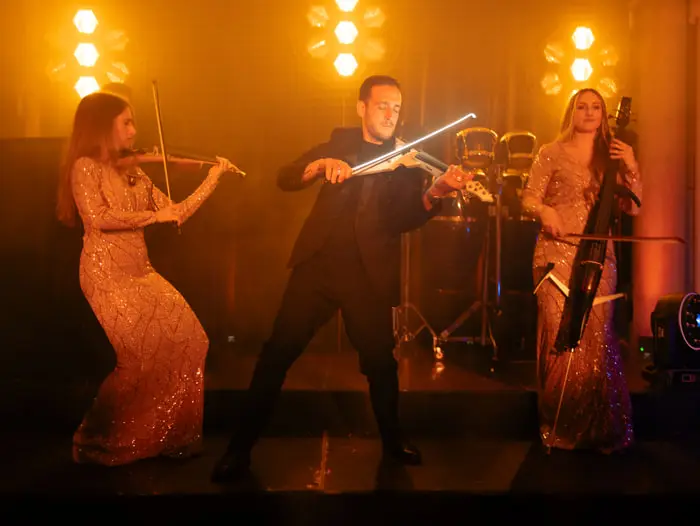 The event format changes the rules of the game
The fourth key element is the format. An intimate dinner for fifty requires a different investment than a convention for five hundred, and the difference goes beyond simply multiplying the head count. An event with a show, a DJ set and a carefully designed stage set brings technical, staging and production costs that a classic seated dinner simply avoids.
Duration matters too: an event held over a single day has a different cost structure than one spread across two or three days, with logistics, catering and staff to multiply for each additional session. Defining the format from the start, with clarity about the objectives and the experience you want to give your guests, remains the step that makes it possible to build a realistic quote.
Realistic budget ranges
To give you a concrete idea, here are some indicative ranges (the figures always vary based on month, venue and city, so treat them as a starting point to orient yourself).
Small, intimate event (up to 50 people, a pared-down format): the range generally starts at a few thousand euros, with attractive savings when you choose the low season and weekdays.
Mid-sized event (between 50 and 150 people, a quality venue, curated entertainment): here the budget sits in a middle range, where the seasonality and day-of-the-week variables can swing the final cost by as much as thirty or forty percent.
Major or structured corporate event (over 150 people, full technical production, experience curation): the range rises significantly, especially if you choose the high season and exclusive venues in large urban centers.
These ranges remain purely indicative: every project has its own identity and deserves a dedicated analysis, one that takes into account every single variable at play.
Read also: Choose your wedding band in Rome for how it sounds, not for how far away it is
How do you arrive at a tailored budget?
The best way to understand how much your event might cost is to start with an in-depth briefing, where objectives, budget, audience and venue are examined together, one piece at a time.
From there you build the DNA of the experience: the setlist, the emotional flow, the ideal soundtrack for your audience. Every performance is tailored, from the opening to the grand finale, with attention to dynamics, pauses and interactions, because the stage becomes storytelling and emotional direction.
The technical side deserves the same care: setup, on-site rehearsals, sound check, coordination with catering, lighting and security. Clear timing from the very first meeting, emergency protocols always ready, a final report to measure the real impact of the event. The level of detail Mikevents guarantees is what turns a budget into an informed investment, one that delivers exactly the experience you had imagined.
If you want to understand how much your event really costs and which month, venue and format let you get the best result with the budget you have, write to Mikevents.
Tell us your idea, we will go over every detail together and build a tailored quote, designed to turn your occasion into something authentic and truly memorable.
How much does it cost to organize an event: frequently asked questions
What is the most cost-effective time of year to organize an event?
The months between October and April, excluding the Christmas holidays, are generally more affordable. During this period demand is lower, and venues, artists, photographers and other vendors can offer more accessible rates than in the months between May and September.
How much does the day of the week affect the cost of an event?
The day of the week can significantly affect the quote. Saturday is usually the most sought-after and expensive day, while Friday, Sunday and above all weekdays can offer greater opportunities for savings.
What factors determine the overall budget of an event?
The budget depends on the month, the day of the week, the venue, the city, the number of attendees, the format and the duration of the event. Technical services, entertainment, catering, staff, staging and the level of production required also play a part.