


Takeaways
- Planning should start with the emotional arc: deciding what guests need to feel at each stage makes it far easier to choose songs, tempos and intensity that hold together.
- The venue should be judged by the sound experience it makes possible. Starting from the music helps you pick the right spaces, sound systems and layouts, and cuts down on technical compromises and last-minute workarounds.
- Success comes down to coordination between the music and everything else: the setlist, the sound check, the catering, the lighting and security all have to move in sync, so the transitions stay smooth and the experience runs unbroken from the welcome to the close.
Mapping the emotional arc first lets you choose spaces, sound systems and timings that work together, and spares you the compromises that end up weakening the experience
Planning an event almost always starts the same way: you look for a venue. It feels like the natural place to begin. You settle on the spaces and lock in the date, leaving the music for later, a detail to sort out once everything else has been decided. That order is one of the most common mistakes in event planning.
Music is what decides how people will experience every single moment of the event, from the welcome to the last dance.
The most effective approach starts from a different angle: what do you want people to feel at each stage of the day?
Answer that question before any other, and everything that follows gets easier: you assess the spaces, the technical constraints and the schedule with a clear direction already in hand.
Read also: Choose your wedding band in Rome for how it sounds, not for how far away it is
The emotional role comes before the songs
Imagine choosing the playlist for a wedding. You could start by looking for beautiful, well-known songs that match the couple’s taste. It is an understandable approach, but only half the picture. The real question is a different one: what should happen emotionally at each moment of the celebration?
The couple’s entrance calls for elegance, a tone that carries the moment without overpowering it. The toast needs warmth, that sense of shared intimacy that draws the guests together. The dance floor, later in the evening, demands pure energy, the spark that gets everyone out of their seats.
Define those emotional roles first and choosing the songs becomes natural, almost automatic. Start from the songs with no clear structure, and you risk an evening that feels piecemeal, where one moment follows another without ever building.
This holds for any kind of event: a wedding, a corporate convention, a private party, a product launch. The goals change, the audience changes, but the underlying logic stays the same. First define what each stage has to do emotionally, then choose the musical means to make it happen.
 Why start with the music instead of the logistics
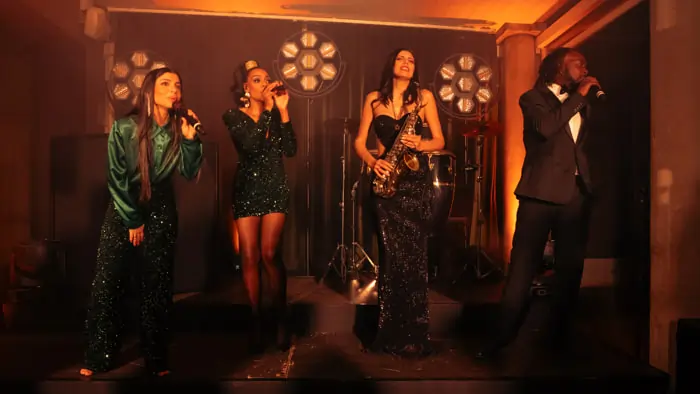
Plenty of people get the order backwards. They book the room, set the schedule, arrange the catering, and leave the music as the last piece to slot in. The result, almost every time, is a soundtrack that bends to the space instead of bringing it to life.
Starting with the music means reversing that logic, to much better effect. First you define the emotional story you want to tell, with its shifts in tone and intensity. Then you work out which venue, which sound system and which layout will actually let you tell it.
This changes the outcome entirely. The venue stops being a neutral container and becomes an active part of the musical story. The acoustics, the arrangement of the rooms, the time it takes to move from one area to another: all of it gets chosen around the sound experience you want to offer, rather than the other way around.
There is a practical side to this as well. Decide the music after the venue is locked in, and you often end up making technical compromises: sound systems that fall short, difficult acoustics, rooms too small for certain setups. Start from the music, and you can choose a venue that suits your sound from the beginning, with no forced workarounds along the way.
A natural progression, never overplayed
A well-designed event tells a story through sound. Each stage has a precise job to do, and the move from one moment to the next should feel natural, with no abrupt jolts.
Take a corporate event. The opening calls for a tone that is professional but welcoming. The central stretch, given over to content, needs a discreet backdrop that never pulls focus. The social moment at the end can lift the energy gradually, easing guests toward a more informal, relaxed close.
That progression only works when it is planned carefully, with the audience, the setting and the goals of the day in mind. A random playlist, however well chosen song by song, cannot create this kind of coherent emotional arc.
 The team behind the scenes matters
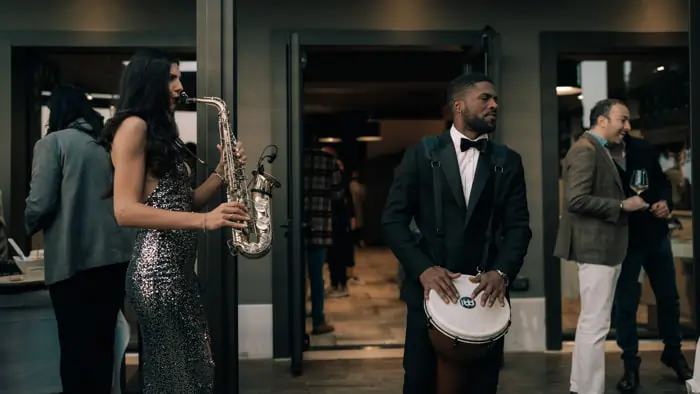
A well-built musical story also takes rigorous technical work. Setting up the sound systems, rehearsing on site, running a thorough sound check: these steps are what guarantee the quality of the final experience. They usually stay invisible to the audience, yet they decide how the event turns out.
It also takes constant coordination between the music and the other parts of the event: the catering, the lighting crew, security. Every stage of the evening involves several teams working in parallel, and the setlist has to line up with all of them to avoid overlaps and dead air.
Planning every detail carefully heads off any mishaps and keeps the evening flowing, from the first note to the last song of the night.
Read also: Live music is what makes a corporate event impossible to forget
The right method starts with the right question
If you are planning an event, try reordering your priorities. Before you go looking for the perfect venue, ask yourself what you want people to feel at each moment of the day. Define the musical story, with its shifts in tone, and only then choose the space best suited to host it.
Mikevents designs exactly that: a musical story that respects style, timing and place, from the ceremony to the after party. Elegance at the entrance, warmth at the toast, energy on the dance floor.
A natural progression, thought through in every detail, from the technical setup to the on-site rehearsals. Our team follows every stage of the event closely, working with the catering, the lighting crew and security to keep things flowing and trouble-free.
Would you like your next event to have a sound identity of its own, consistent from beginning to end?
If so, write to us and tell us your idea. Together we will build the musical journey that best fits your personality, before you even choose the ideal place for you.
Should you choose the music before the venue? Frequently asked questions
Why choose the music before the venue?
Choosing the music first lets you define the emotional arc of the event and find a venue that suits your sound. You can assess the acoustics, the sound systems, the layout of the spaces and the timings in advance, which avoids technical compromises and forced workarounds.
How do you build the musical arc of an event?
The musical arc starts from the emotion guests should feel at each stage. The welcome may call for elegance, the toast for warmth, the closing moment for more energy. Once those emotional roles are set, choosing songs, tempos and intensity becomes much simpler.
Which technical elements need to be coordinated with the music?
The music has to be coordinated with the sound system setup, the on-site rehearsals, the sound check, the catering, the lighting crew and security. When the different teams plan together, they head off overlaps, dead air and last-minute problems.