


Takeaways
- Show direction for a corporate event starts with the script for the day, which sets out speeches, videos, music stings and lighting changes in the order and at the minute they will happen. During the event, a single person cues every transition for the technicians, performers and host, so that each of them starts at exactly the right moment.
- For moments that demand perfect synchronization, such as a product reveal, music, lighting, video and effects are linked to a shared timecode. That common reference triggers every machine on the same frame, and the sequence is tested at the dress rehearsal.
- When a speaker runs over, a video fails to play or a guest arrives late, the show caller settles on a fix within seconds, with backup music, stings that stretch out and a plan B prepared in advance. Most of the time, the audience notices nothing.
At a convention, speeches, videos, music and lighting hand off to one another dozens of times, and show direction keeps every handoff in sync, from rehearsals to the walk-out
At a half-day convention, the stage changes hands constantly. The CEO speaks, a video rolls, music comes in for the change of speaker, the lights dim for an awards presentation, the host returns. Each of these transitions involves at least three people (the sound engineer, the lighting technician and whoever runs the video), and they all have to move within the same second.
If no one coordinates those seconds, the day lurches along even when every vendor does its job well: gaps between speakers, applause that fades into silence, a speaker walking on stage while the previous video is still ending. Show direction exists to prevent this, with work that begins weeks earlier, on a script drafted on paper, and ends with decisions made over the headset while the audience watches the stage.
Read also: Goals first, wow factor second: how to design a corporate event people remember
What show direction does at a corporate event
Show direction for a corporate event starts with a document, the script, which lays out the day minute by minute: who speaks and for how long, what music brings them on and off the stage, which video follows, how the room is lit. From the script comes the cue list, the numbered list of signals, the cues that will trigger every action during the event.
On the day of the event, the show caller sits at front of house, usually at the back of the room, and, connected by headset to the sound engineer, the lighting technician, video control, the stage and the host, calls every cue out loud, in the order written. The technicians go only on the show caller’s signal, and that signal comes at the scheduled moment, so every transition lasts exactly the seconds the script gives it.
There has to be a single voice, because when several people give orders to the technicians, each with their own sense of timing, mistakes happen precisely in the transitions, where the audience is paying the most attention.
 Speeches, videos and music in the same script
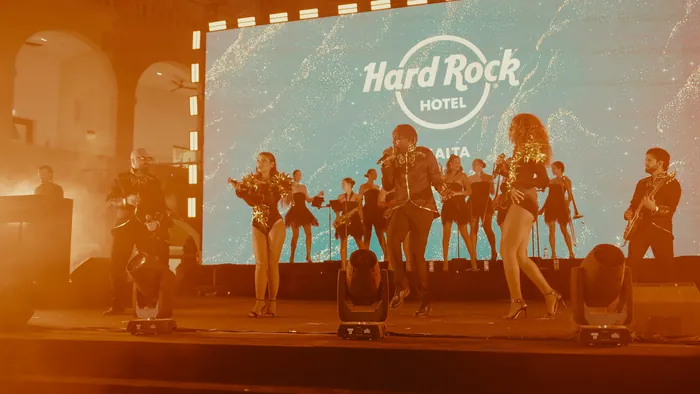
At a convention, music does most of its work between one moment and the next. There is the walk-in music, which welcomes the audience as they take their seats and, a few minutes before the start, changes character to let the room know that things are about to begin. There is each speaker’s walk-on music, which covers the steps to the lectern and ends as the speaker reaches the microphone. Then there are the stings, brief musical accents that separate two speeches or punctuate a scene change, and finally the walk-out music, which plays as people leave and leaves the room with its final impression of the day.
In the script, each of these moments has its own line, with the track, the duration, the lighting and the person who needs to be ready in the wings. The same goes for videos, which have to be introduced, rolled and closed out with the right music. Since music and videos are chosen to match the brand’s tone of voice, whoever writes the script works with the company’s marketing team from the outset, and the walk-in music is already telling the brand’s story before anyone steps on stage.
Built this way, a convention has a rhythm the audience feels without noticing, because there is never that lull between segments when people in the room reach for their phones.
 Timecode, for moments with no margin for error
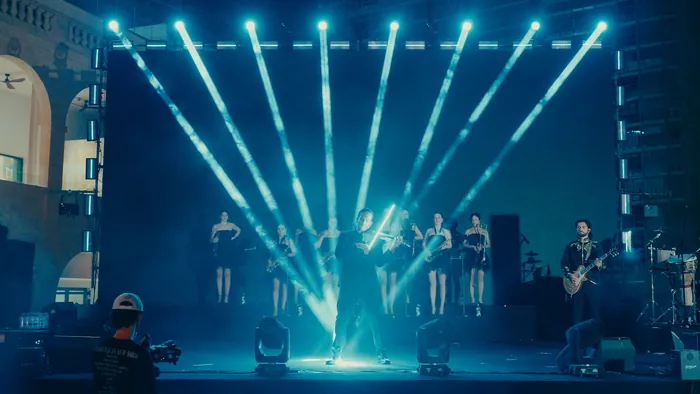
Some transitions cannot be left to a spoken cue, however quick the show caller may be. In a product reveal, the drape drops, the lights come up, the video rolls, the music kicks in and perhaps confetti falls, all at the same instant, and half a second of delay between one technician and another is enough to rob the moment of its impact.
In these cases, the show caller relies on timecode, a synchronization signal that every machine reads at the same time, marking time in hours, minutes, seconds and frames. The audio mixer, the lighting console, the media server and the special effects are all programmed to the same reference, so when the timecode starts, every action lands on its designated frame.
The timecode sequence is built in advance and tested at the dress rehearsal, since a programming error would throw an effect out of sync with the music in front of the entire room. Timecode triggers the sequence, but the decision to launch it stays with the show caller, who waits for the moment the audience is ready.
Rehearsals, with and without the speakers
A corporate event has two kinds of rehearsal. The tech rehearsal checks every cue with the vendors, without an audience and often without the speakers; the dress rehearsal runs the script from start to finish, in real time, with the host and whichever speakers are able to attend.
Some speakers skip the rehearsal, usually the most senior ones, who arrive shortly before they go on. The show caller plans for this, bringing in a stand-in to pace out the walk from the entrance to the lectern and check the microphone, and then gives the speakers themselves a few essential details to remember: where to enter, where to look and who will signal them to wrap up.
Rehearsals are also when the contingencies get written, the backup cues that will come into play if something changes, and each contingency has its own number in the cue list, just like the planned transitions.
When something goes off script
On the day of the event, something almost always strays from the plan. A speaker talks far longer than scheduled, a video will not play, the guest expected for the awards is still on the way. The show caller has a few seconds to choose a fix and makes the call alone, because stopping to consult everyone would mean leaving the stage empty.
The tools are the ones prepared in advance. Backup music, ready at any moment, fills the silence while the video reloads, stings stretch or shrink to make up for lost time, and the host receives the revised rundown through an earpiece or on a card.
If a speaker runs over, the show caller recalculates the timing of everything that follows and decides where to make up the time, without touching the moments that matter most to the company, such as the closing speech or the awards. That way, more often than not, the delay stays between the show caller and the technicians, and the room never notices.
Read also: Corporate event DJs: why the job is different from club DJing
Show direction for your next corporate event
At Mikevents, show direction is part of the music project from the very first meeting. We start with the event’s tone of voice and KPIs to build the program, we write the music script and the cue list, and in the room we coordinate speeches, videos and reveals, with timecode where needed, from walk-in to walk-out. We handle audio, lighting and special effects with trusted partners or with the venue’s in-house production team, and confidentiality and brand safety are built into every production.
We write the contingencies and the plan B together with the script, and once the room has emptied, we send the company a post-event report on how the day went.
If you are planning a convention, a launch or a gala, send us the agenda you have in mind and we will turn it into a script. You can see how we work with companies on our music for corporate events page.
Corporate event show direction: frequently asked questions
What does show direction involve at a corporate event?
Show direction for a corporate event means writing the script for the day, with speeches, videos, music and lighting in chronological order, and deriving the cue list from it: the list of signals that trigger every action. During the event, a single person calls the cues for the technicians, performers and host, and decides how to respond when something goes off script.
What is timecode used for at a convention?
Timecode is a synchronization signal that marks time in hours, minutes, seconds and frames. At a convention, it is used for moments when music, lighting, video and special effects must start together, such as a product reveal, because every machine reads the same reference. The sequence is programmed in advance and tested at the dress rehearsal.
How is a corporate event rehearsed?
Show direction for a corporate event includes a tech rehearsal, which checks every cue with the sound engineer, the lighting technician and video control, and a dress rehearsal, which runs the script in real time with the host and any speakers who are available. For those who cannot attend, the show caller brings in a stand-in and prepares backup cues.