


Takeaways
- The marketing brief comes before any operational choice: goals, core message, tone of voice, budget and timing all need to be set before you start looking at venues, catering, music and stage direction.
- The audience and the KPIs shape the structure of the experience. Knowing who will be in the room lets you calibrate language, pacing and content, while performance indicators turn the event into a measurable investment.
- Convention, gala, product launch or hybrid event: the format should follow from the result you expect, so that every creative element pulls toward the same goal.
Goals, audience and KPIs define the format of the event and guide every choice that follows, from the venue to the music, turning each element into a tool that serves the brand strategy
Imagine you have to organize your company’s annual convention.
The first questions that come to mind, I would bet, are: where do we hold it? Which venue, which menu, which DJ do we book?
They are fair questions, almost automatic ones, but they come too soon.
Before you decide where to put the chairs, you need to know why you are bringing together the people who will sit in them. What should they take home from that day? What changes, for them and for the company, once the event is over? These questions come before any quote, before any site visit.
If you have ever experienced the frustration of a technically flawless event, with a magazine-worthy venue and refined catering, yet oddly hollow, you know exactly what we are talking about. People walk out of that room and struggle to remember what they felt or what they are supposed to do the next day.
The problem almost always starts at the same point: you begin with the form instead of the function.
You choose the packaging before you have defined what goes inside it. An event built that way, however polished the details, is still just an elegant shell wrapped around nothing at all.
Read also: Live music is what makes a corporate event impossible to forget
The brief comes first
Every corporate event that truly works starts with a simple but powerful document: the marketing brief. That is where you define what the company wants to achieve.
Do you want to launch a product and create immediate desire? Align a thousand people behind a new strategy? Celebrate a result and strengthen the team’s sense of belonging?
Each goal calls for a different event, with a different pace, a different tone, a different length.
The brief answers concrete questions. What is the core message people should take home? What is the brand’s tone of voice: formal, playful, visionary? What are the budget and time constraints?
Without those answers, every decision that follows is a guess, and guesses get expensive once they turn into invoices.
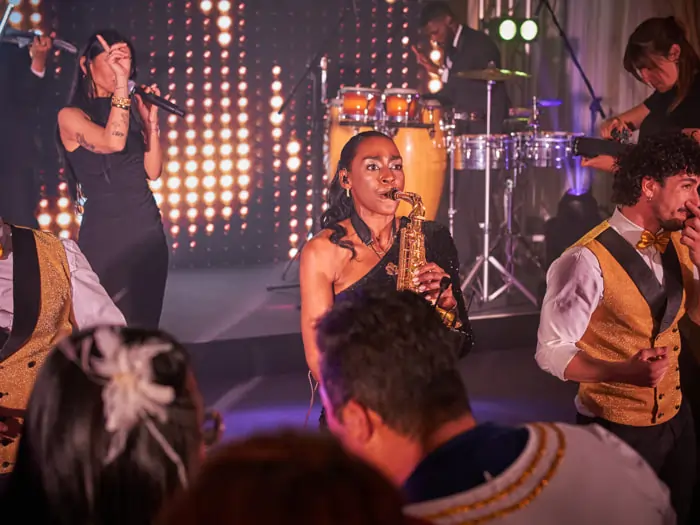 Knowing your audience is a golden rule
The second step is about the people who will be in the room. An audience of international executives used to high-end events responds to different cues than a team of new hires at their first company convention. Average age, cultural background, role in the company, the expectations they walk in with: all of it changes the way the content lands.
Understanding your audience lets you calibrate the language, the pacing and even the choice of artists. A musical moment that moves one crowd can feel out of place with another. This is why knowing the audience comes before any creative decision, and guides it precisely.
KPIs: how you measure success
A corporate event without KPIs is one you judge on gut feeling alone, the morning after, over coffee. But gut feeling is not enough to justify the investment to management. KPIs turn an experience into a measurable result: how many people interacted with the new product during the reveal, how much time was given to the strategic message, what share of the audience actively took part in the key moments.
Setting the KPIs before the event forces you to think ahead about how to build each moment of the day, with calculated timings, targeted content, and stage direction that knows exactly what needs to happen and when. Time, at a corporate event, is the most precious resource: every minute has to work toward a goal.
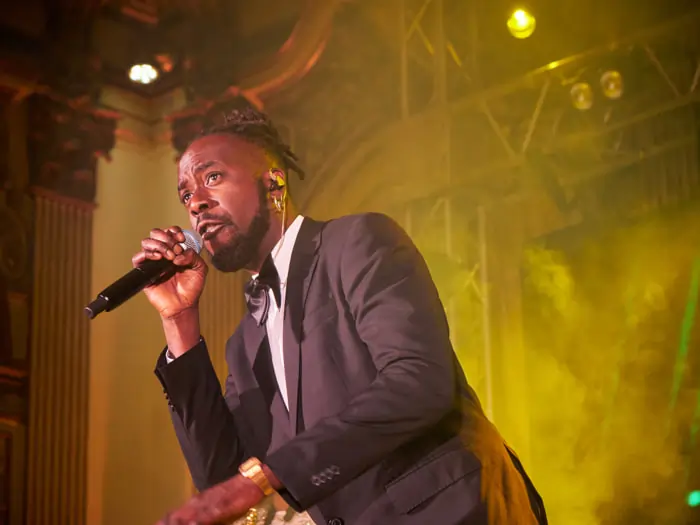 Choosing the format
Only now does the format come into play. A convention, an evening gala, a product launch with a staged reveal, a hybrid event with an online component: each format serves a different goal and suits a different audience.
The format is the narrative structure of the whole day, the container that holds together the speeches, the musical moments, the breaks, the videos and the surprises.
When the format grows out of the brief, the audience and the KPIs, every element finds its place naturally. You already know how much time to give the keynote, how much to the entertainment, how much to networking. The run-of-show stops being an improvisation and becomes a score.
Only then: venue, catering, music, stage direction
At this point, and only at this point, the elements that so often get chosen first finally have their turn. You pick the venue based on the format and the audience, not on the charm of the room. The catering is built around the timing of the event, not the other way around.
The music supports and reinforces the message, with a precise narrative role: it opens, it closes, it punctuates, it builds anticipation before a reveal. The technical direction stitches every element together with exact timecodes, so that a speech, a video and a live moment follow one another without friction.
Designing in this order changes the result completely. An event built from the brand’s goals speaks with one voice from the first minute to the last, and the people in the room feel it.
Read also: Wedding music and entertainment are two jobs that should not be handled by the same person
How we work at Mikevents
At Mikevents we apply this approach to every convention, gala and product launch we design. We always start with the brief, the brand’s tone of voice and the event’s KPIs — time, messages, audience — before we even talk about venues or artists. Our carefully selected international roster lets us build tailored programs where speeches, videos and reveals are orchestrated with precise timecodes and technical direction.
Confidentiality and brand safety are standard for every client, anywhere in the world. The result is an event that leaves nothing to chance, where every creative element serves a goal defined in advance.
If you are about to design your next corporate event, start from the right question: what do you want your audience to think, feel and do when they leave the room?
Write to us and tell us your brief. From there, we will build the format, the direction and every detail needed to turn a brand goal into an experience your company will remember.
How to organize a corporate event starting from the brief: frequently asked questions
Where do you start when organizing a corporate event?
Planning a corporate event should start with the marketing brief, which defines the goals, the core message, the tone of voice, the audience, the budget and the timing. Only once those are clear can you make consistent choices about the format, the venue, the catering, the music and the stage direction.
Why does it matter to know the audience of a corporate event?
Knowing the audience lets you calibrate the language, the pacing, the content and the creative choices. Age, role in the company, cultural background and previous experiences all influence how people perceive the event and respond to each moment of the day.
Which KPIs can you use to measure a corporate event?
KPIs can measure how actively the audience takes part, the interactions with a product, the time devoted to the strategic messages and the engagement during the main moments. Defining them before the event helps you design a run-of-show where every activity contributes to a specific goal.