


Takeaways
- Geographic distance is a secondary factor next to specialization: a band experienced in weddings knows how to manage the timing of the event, read the energy of the guests, and adapt its repertoire to the different phases of the day.
- Roman venues call for specific preparation: historic villas, noble palaces, and panoramic terraces come with acoustic characteristics and technical constraints that have to be met by calibrating volume, instrumentation, and musical style.
- The quality of the performance also depends on the band’s ability to work with the wedding planner, the technicians, and the creative direction: music, lighting, entrances, and symbolic moments have to follow a coherent direction that can turn the whole wedding into an emotional story.
In a city rich with villas, historic palaces, and one-of-a-kind settings, a band’s quality is measured partly by how well it adapts to the context
Planning a wedding in Rome means choosing from an enormous range of musical options, and it’s natural to wonder whether it makes more sense to go with a local band or to look for the one that fits best, even a few kilometers away.
In reality, proximity is a secondary detail. What truly makes the difference is the musicians’ ability to interpret each phase of the day, adapt to the venue, and create the atmosphere you’re after.
In Rome this matters even more: historic villas, noble palaces, panoramic terraces, and period residences call for experience, sensitivity, and a repertoire that can bring out the best in very different settings.
The best choice, then, isn’t the closest band but the one that can turn music into an essential part of the experience you and your guests will remember for years.
Read also: Getting married in Rome means choosing music suited to centuries-old palaces and villas
The real criterion is specialization, not proximity
Many couples start from the idea that a nearby band is automatically the most convenient and reliable choice. In reality, logistical convenience counts for little if the group has no specific experience with weddings.
Playing a private event calls for different skills than a concert or a night at a club: you have to manage the timing of the ceremony, adapt to scene changes, read the energy of the guests, and adjust the repertoire in real time.
A band that specializes in weddings knows these dynamics inside out. It knows when to raise the tempo and when to make room for a more intimate moment, it knows how to handle the couple’s entrance with the right emotional intensity, and it knows how to build a setlist that carries the evening from the cocktail hour to the grand finale on the dance floor. This kind of preparation makes far more difference than geographic distance.
A repertoire tailored to historic venues
Rome is a city that offers extraordinary settings: noble villas, panoramic terraces, centuries-old gardens, farmhouses tucked into the Roman countryside. Every place has its own natural sonic identity. A repertoire that works perfectly in a Puglian masseria can feel out of place in a Renaissance villa in the heart of the capital.
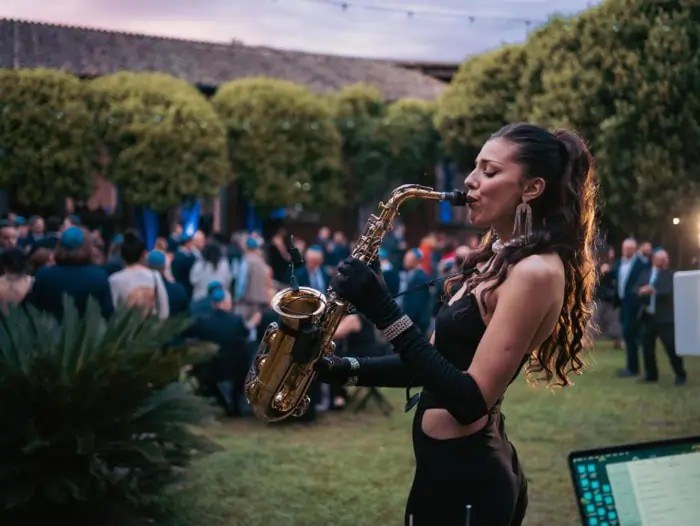
For this reason, when you choose a band for your Roman wedding, make sure the group can adapt its repertoire to the setting. An acoustic set can bring out the best in an eighteenth-century cloister, while a more energetic set can light up the garden of a historic villa during the evening reception. The ability to calibrate volume, instrumentation, and musical style to the acoustics and the atmosphere of the place is a hallmark of professionalism.
Always ask for concrete examples of events held in venues similar to yours. A band that has already played in historic, prestigious settings knows the technical challenges these spaces bring, from acoustic limitations to volume regulations, and can move with confidence without compromising the quality of the performance.
 Integration with the creative direction makes the difference
A successful wedding isn’t the sum of individual vendors each excellent on their own. It’s an orchestrated project, where music, lighting, décor, and direction speak to one another to create a single emotional narrative. That’s why the ideal band, beyond being technically strong, also has to be able to integrate with an overall creative direction.
That means working with the wedding planner and the creative team to build a coherent timeline, syncing the musical moments with the entrances, the toasts, the cake cutting, and every symbolic moment of the day. It also means being able to talk with the sound and lighting technicians to make sure every visual and sonic element pulls in the same direction.
When music is conceived as part of a broader direction, the result changes completely. The stage stops being a mere spot where a band performs and becomes a storytelling tool, one that can guide the guests’ emotions across the whole evening.
How to evaluate a band in practical terms
Before signing a contract, there are a few practical points to check.
Listen to live recordings, not just studio ones, to hear how the group really sounds live. Ask for references from weddings already held in venues similar to yours. Check how flexible the repertoire is and whether they’re willing to personalize songs or create medleys on request.
Find out about the technical equipment the band brings with them and how they handle rehearsals and sound checks. Finally, assess how well the team communicates: a band used to working in sync with other vendors responds promptly and proposes solutions, rather than simply following instructions.
Read also: You choose the wedding venue based on the musicians you want, not the other way around
Quality is an investment, distance a logistical detail
Are you looking for the perfect band for your wedding in Rome?
Then look beyond geography. Focus on specific preparation for private events, on the ability to read and bring out the best in historic venues, on the willingness to work as part of a larger artistic project. These are the elements that make a performance memorable, far more than the distance between the band’s studio and the reception venue.
A wedding is remembered for how you felt that day, and music is one of the most powerful languages for building that memory. Choosing wisely means giving yourself the certainty that every note lands at the right moment, with the right intensity, in perfect harmony with everything else.
At Mikevents, we believe every event deserves a direction refined down to the smallest detail, one where music becomes a genuine emotional journey, from the opening to the grand finale. If you want to turn your Roman wedding into an authentic, tailor-made experience, get in touch: together we’ll build the perfect soundtrack for your story.
Choosing a band for a wedding in Rome: frequently asked questions
Is it better to choose a local band for a wedding in Rome?
Geographic proximity isn’t the most important criterion. It’s preferable to choose a band that specializes in weddings, one that can manage the different moments of the day, adapt its repertoire to the venue, and interpret the atmosphere the couple is after.
How should a band adapt to Rome’s historic venues?
A professional band has to know how to calibrate repertoire, volume, and instrumentation to the acoustics and the identity of the venue. Historic villas, noble palaces, cloisters, and panoramic terraces can call for different musical solutions and particular attention to technical limitations and volume regulations.
How do you evaluate a band before choosing one for your wedding?
Before signing the contract, it helps to listen to live recordings, ask for references from weddings held in similar venues, and check how flexible the repertoire is. It’s also important to find out about the equipment, how sound checks are handled, and the band’s ability to work with the wedding planner, the technicians, and the creative direction.