


Takeaways
- A wedding music planner divides the day into phases, chooses the performers and writes a setlist with songs, volume levels, entrances and exits. The same setlist also marks the moments when the music needs to stop or fade down, because that is when words or anticipation matter most.
- The most important pauses fall during the ceremony, where the liturgy calls for moments of silence and the civil ceremony for the reading of articles of the Civil Code, and at the reception, during the toasts and speeches. Before the first dance, a few seconds of silence are enough to capture the room’s attention.
- Silences nobody planned, such as the gap between the band finishing and the DJ starting, are a common mistake in wedding music. The music planner avoids them by scripting every handoff from one phase to the next and having the performers overlap.
A wedding soundtrack is designed together with its pauses, because a well-placed silence gives weight to the vows, the speeches and the anticipation before the first dance
At a wedding, there are moments when the music is better off silent. During the vows, as the best man rises for the toast, in the seconds before the first dance, guests need to hear a voice or hold their breath, and any note in the background would distract them.
The music planner marks these moments in the setlist with the same care that goes into choosing the songs, because stopping the music and bringing it back also takes a cue, someone to give it and a performer ready to pick it up. When no one takes charge of this, the problem comes to light on the wedding day, perhaps with the music starting up again over the groom’s speech.
Read also: You can tell an elegant wedding even by the volume of the music
What a wedding music planner does
A wedding music planner designs the music for the entire day, from the moment guests arrive to the last song of the night. The planner starts with a consultation with the couple, then divides the program into phases (ceremony, cocktail hour, dinner, dancing), selects the right performers for each one and produces a setlist in which every moment has its song, its volume and its cue to begin.
What sets this work apart from simply coordinating vendors is the musical arc of the day: the way the music rises, softens and stops in step with what is happening among the guests. A celebration where the music stays at one volume from cocktail hour to midnight wears out even guests who love to dance; a well-built progression takes the room from the emotion of the ceremony to the energy of the dance floor without anyone noticing.
That is why the setlist also includes entries with no music, each with an approximate time and the name of the person who will give the cue to start again. These pauses vary in nature from the ceremony to the dancing, and alongside the intentional ones are the gaps no one should ever leave.
The pauses in the ceremony
The first pauses of the day are set by the ceremony itself. At a wedding celebrated within Mass, the liturgy provides for sacred silence as part of the celebration, and the General Instruction of the Roman Missal places it, among other moments, after the readings and the homily, as an invitation to reflect on what has been heard. During those moments the instruments fall silent, which is why the music planner entrusts the ceremony music to musicians who know the liturgy and respect its silences.
In a civil ceremony, the most important words belong to the officiant, who reads aloud to the couple Articles 143, 144 and 147 of the Italian Civil Code, on the rights and duties of spouses toward each other and toward their children, and then receives from each of them, one after the other, the declaration that they wish to marry. Nothing should play over those words, not even soft background music, because guests at the back of the room need to hear them too.
In both ceremonies, the moment the music comes back in, after the vows and at the signing, is agreed on in advance with the officiant, so that the first chord sounds when the pen is already in hand.
 The toast and the speeches
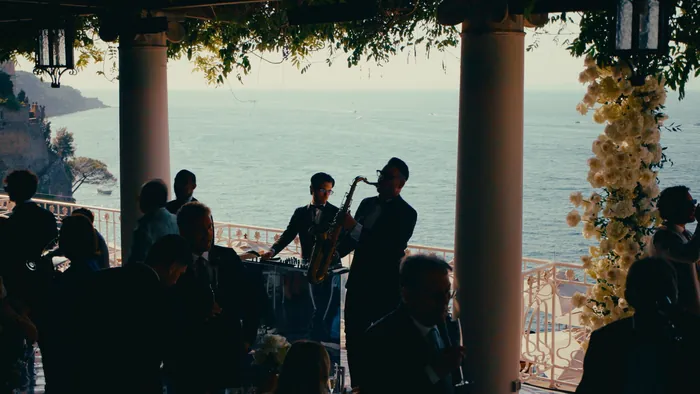
At the reception, the important words belong to the guests: the best man’s toast, a parent’s speech, the couple’s thank-you. Before each one, the music fades down gradually, because an abrupt cut would sound like a mistake, and the microphone should be turned on and tested before the speaker stands up, so the room is not left waiting for the sound engineer.
The music planner works out the order and timing of the speeches with the couple and the caterer, so that the toast comes once the servers have finished pouring. After the last round of applause, a song chosen specifically for that moment gets the party going again, and the room finds its voice again on its own.
At dinner, the music softens without disappearing
During dinner, pauses are rare; what changes are the volume and the role of the music. For most of the meal, an acoustic set unfolds alongside the conversation, while the more striking staged performances are timed to the courses and the lighting, and last just long enough for the next dish to reach the table as they end.
After each performance, the music planner gives guests a few minutes at low volume, time to talk about what they have just seen and pick up where their conversations left off. Those minutes let a dinner breathe; filling them with another act would turn the evening into a show guests have to sit through.
The wait before the first dance
Of all the silences at a wedding, the one before the first dance is the shortest and the most charged. The dinner music fades out, the lights come down over the dance floor, the newlyweds make their way to the center, and for a few moments the room waits in silence. Then the first notes arrive, and the anticipation of those few seconds makes them far more moving than they would be if they began without a pause.
That wait is rehearsed like a scene. The music planner decides who cues the lights and the performers, how long the darkness lasts and where the newlyweds enter from, and the same pattern is repeated, more briefly, for the cake cutting.
 The gaps nobody planned
Alongside the intentional pauses, many weddings have silences that nobody chose. The band finishes its last set and starts packing up while the DJ is still connecting the console; guests move from the church to the villa and find a silent garden; dinner ends earlier than planned and the dance floor stays dark until someone notices. Every gap of this kind drains energy from the room, and bringing the energy back to where it was takes far more effort than keeping it there.
The music planner prevents these gaps by writing the transitions between phases into the setlist as well. The performers overlap for a few minutes, so the DJ starts while the band plays its last song, and when guests move to a new location, someone is waiting for them with the music already playing. The music curfew agreed on with the venue also goes into the setlist from the very beginning, and the ending is planned backward from that time, with a farewell song chosen with the couple, so the celebration ends on schedule and on the note the couple wanted.
Read also: The wedding reception playlist is written with the floor plan of the room in front of you
Your wedding music, pauses included
With Mikevents, Music Planning starts with an analysis of the setting and your emotional goals as a couple, and becomes a dynamic setlist that we see through with musical direction and rehearsals. For each phase, we choose performers from our roster, from quartets for the ceremony and acoustic sets for cocktail hour to DJ sets with sax or electric violin, and we decide with you where the music should step aside.
The repertoire can be personalized, and to allow time to build it, we recommend reaching out 4–6 months before the wedding, or earlier if you are getting married in peak season.
If you would like to know how your day could sound, tell us about the moments that matter most to you, from the vows to the first dance, and we will use them as our starting point. You can find our ensembles on the music for exclusive weddings page.
Wedding music planners: frequently asked questions
What does a wedding music planner do?
A wedding music planner designs the music for the entire day, divides it into phases (ceremony, cocktail hour, dinner and dancing), chooses the right performers for each one and writes a setlist with songs, volume levels and start cues. The setlist also marks the pauses, such as those for the speeches and the wait before the first dance, and on the wedding day the music planner coordinates the musicians, the DJ and the technicians.
When does the music stop during a wedding?
During a wedding, the music stops when words or anticipation matter most: during the silences the liturgy calls for after the readings and the homily, during the reading of the Italian Civil Code articles and the declaration of consent in a civil ceremony, and during the toast and speeches at the reception. A short pause often comes before the first dance and the cake cutting as well.
When should you contact a wedding music planner?
For the most sought-after ensembles, it is best to contact a music planner 4–6 months before the wedding, and earlier in peak season. That time allows for the consultation with the couple, the choice of performers and building the setlist, along with rehearsals for the most delicate moments, such as the toast and the first dance.