


Takeaways
- A gala dinner show brings cuisine and entertainment together into a single experience, with courses, music, performances and lighting coordinated around a precise running order.
- Table service and the performances are coordinated through a shared run-of-show that syncs kitchen timings, lighting, stage entrances and pauses.
- The dessert is the high point of the evening, while the walk-out closes the event, holding the energy and completing the story the show has been telling.
Table service and live performance are coordinated through timing, lighting and scene changes, all the way to the dessert that carries the climax and the walk-out that closes the evening
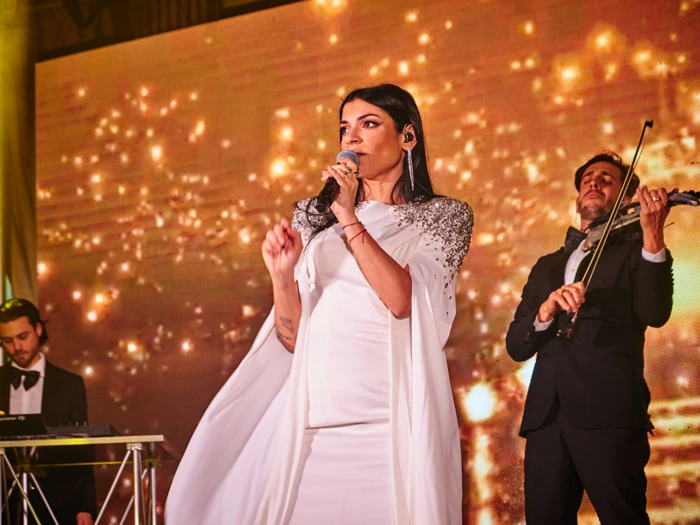
A gala dinner show is a gala dinner where the meal and the live performance are designed together. Guests dine while music, performances, lighting and other artistic moments unfold alongside each course, following a precise running order. Every stage of the meal can become part of the show, from the appetizer to the dessert, creating an experience that engages taste, sight and hearing at once.
What sets it apart is exactly that integration of cuisine and entertainment: this is not a dinner followed by a show, but a single event built around both.
The first applause comes even before the first bite, and that changes everything. In a gala dinner show, the room comes alive on cue, the lights dim at exactly the right moment, and the music starts in perfect sync with the arrival of the first course. That is the secret: every course and every note are held in a balance calibrated to the last detail, where the rhythm of the meal becomes the show itself.
A gala event, as most people picture it, means an elegant dinner with the entertainment as a separate act. When the evening is planned with real method, the reality is something else entirely: courses and performances interlock in a sequence that holds attention from the appetizer to the coffee, turning every plate change into a scene change.
Guests experience it as one seamless story, one where the kitchen and the music speak the same emotional language from the first minute to the last.
Read also: Why staging a dinner show in Dubai demands a precise set of rules
Alternation: the heart of the staging
A gala dinner show works like a score. Each course is a measure, each musical interlude a change of tone. The appetizer arrives with a soft opening, perhaps a piano or a chamber orchestra playing softly beneath the first conversations and putting guests at ease.
The first course brings rising energy, a solo voice or a quartet that raises the emotional temperature and sets up what comes next. The main course is where the evening finds its character: here the artistic choices reflect the DNA of the brand hosting the event, with genres and performances chosen specifically for the audience in the room.
The secret is in the pause. Between courses, calculated silence leaves room for applause, for conversation, for a breath. Table service and the artistic running order talk to each other constantly, and the person coordinating the evening knows every kitchen timing, every lighting cue, every stage entrance in fine detail.
Kitchen and stage direction work in parallel, on a shared run-of-show that keeps both teams aligned. The result is a flow the audience reads as natural, almost spontaneous, even though it rests on painstaking synchronization, built rehearsal after rehearsal.
 Dessert as the climax
If the dinner is the score, the dessert is the final crescendo.
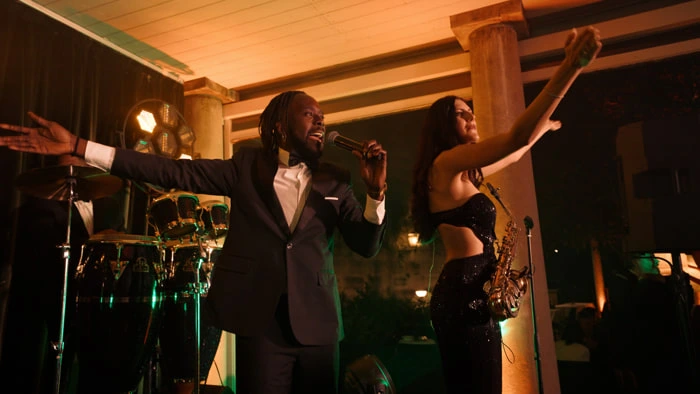
This is the moment when the energy of the evening peaks, and the artistic choices are made with exactly that in mind. This is where you often find the most spectacular number of the night: a live performance that combines music, lighting and choreography, turning the arrival of the dessert into an event of its own, a small show inside the show.
Timing decides everything here. The dessert arrives exactly as the emotional tension built over the preceding minutes reaches its peak, so that taste and spectacle fuse into a single shared memory. Every detail, from the temperature of the plate to the length of the solo, is calibrated to create the sense of wonder that comes with a great finale. The lights come down, the volume comes up, and for a few minutes the whole room breathes at the same tempo.
This is often the moment guests remember best, the one they describe to friends and colleagues the next day. Which is exactly why it deserves the most care at the design stage: the running order, the artists, the lighting, everything converges on this one moment, built to leave a mark.
A coordinated walk-out
After the climax, the evening needs an ending worthy of it. The walk-out, the artists’ final exit and farewell to the audience, is coordinated with the same precision the evening opened with. The most common risk here is energy that drops abruptly, an ending that feels improvised after such a carefully built crescendo.
The answer is to treat the walk-out as an integral part of the staging, with the same creative weight given to the opening and the climax. The artists come back on stage together, perhaps with an ensemble number that draws the audience in, while the lighting carries their exit into the farewells or the after-dinner reception.
This closes the narrative circle opened by the first note of the evening, and leaves guests with the feeling of having lived a complete story, with a clear beginning, middle and end, just like a real piece of theater.
 How a gala dinner show actually comes together
Behind that seamless alternation of courses and applause lies a precise working method. Every project starts with an in-depth brief, where we define goals, budget, audience and venue together. From there we study the DNA of the brand hosting the event, and shape the ideal soundtrack for that specific audience, that occasion, that message you want the world to hear.
The choice of artists follows from mapping out the experience you want to give your guests, with clear timelines from the first meeting. Every performance is tailored, from the opening to the grand finale, handling dynamics, pauses and audience interaction at every single point of the evening. The stage becomes a storytelling medium, guiding the feeling of the night course after course, note after note, all the way to the last round of applause.
This approach lets the structure of a gala dinner show adapt to very different settings: a corporate convention, an anniversary, a charity gala. The audience and the goals change, but the method stays the same: close listening, detailed planning, and staging that turns every course into a chapter of the same story.
Read also: Hard Rock Hotel chooses Mikevents for the opening of its new Malta hub
Your next gala deserves this kind of care
Are you planning a gala? Do you want every course to speak to the music, the dessert to become the high point of the night, and the finale to leave your guests with a memory that stays with them?
The Mikevents team can build that experience with you, from the first meeting to the last round of applause. Your gala starts taking shape in that first conversation: we talk through goals, budget, audience and venue, and from there we study the character of your brand to find the right soundtrack for the occasion.
We choose the artists around the atmosphere you want to create, with clear deadlines set from the start. Every performance is created specifically for you, from the opening entrance to the grand finale, playing with rhythm, pauses and moments of interaction with your guests. The stage works like an invisible director, holding attention across the whole evening and keeping the tension exactly where it should be.
Write to us and tell us your vision: together we will build the perfect running order for your next event, course after course, note after note.
Gala dinner show: frequently asked questions
What is a gala dinner show?
A gala dinner show is a gala dinner where the meal and the live performance are designed together. Music, performances, lighting and other artistic moments unfold alongside each course, following a precise running order, from the appetizer to the dessert.
How are the dinner and the show coordinated in a gala dinner show?
Table service and the artistic running order are coordinated through a shared run-of-show. Kitchen timings, lighting cues, stage entrances and pauses are organized to keep the different teams aligned and to make the evening flow.
What role do the dessert and the walk-out play in a gala dinner show?
The dessert is the final crescendo of the evening and can be paired with the most spectacular performance of the night, with music, lighting and choreography. The walk-out is the artists’ final exit and farewell to the audience, designed to hold the energy and complete the story the show has been telling.