


Takeaways
- The program of a music event starts with the guests’ timeline: arrival, dinner, the moments of peak attention, the party and departure. These times depend on the kitchen, the speeches, transportation and permits, and the artists are slotted in afterward, at the moments when the audience is ready to listen.
- Awards and speeches work best at the end of dinner, when guests are still seated and before the party begins. Backstage, meanwhile, the changeovers between artists are prepared with shared backline, a sound check in reverse order and a DJ who fills the gaps.
- The time the music has to end is set by the municipal permit, for events open to the public, or by the contract with the venue. The program is built backward from that time, so that the high point of the party comes before closing.
Guest arrivals, dinner, peak attention, the party and departure set the rhythm of the evening, and the program gives each artist the moment when the audience is ready to listen
The program for an evening of live music starts with two times: when the guests will arrive and when they will leave. In between come the moments the audience actually experiences (the welcome, dinner, speeches or awards, the party), and each one runs on a timeline shaped by things that have nothing to do with music, such as the kitchen, the speakers, transportation and local regulations.
The artists are placed within this structure. When the program is built the other way around, starting with the artists’ availability and the length of their sets, it looks perfect on paper, but in the room the most anticipated band plays while half the guests are still in line at the coat check, and the awards land in the middle of dessert.
This holds for a corporate gala as much as for a private party or a night in a concert series, and the thinking follows the same order in which guests experience the evening, from the moment the doors open to the last song.
Read also: A gala dinner show alternates courses and applause with the same precision
It all starts with when guests arrive
Guests at an event do not all arrive at once, and quite a lot of time can pass between the first and the last, with parking, the coat check, check-in and greetings. Welcome music therefore has to be flexible, able to go on for a long time without growing tiresome and to wrap up when needed, and no highlight should be placed early in the evening, because only those who arrived on time would see it.
The opening of the doors also sets a deadline for technical work. The sound check must be finished before the first guest walks in, so the artists arrive at the venue well ahead of the audience, and their call time is worked out backward from the guests’ arrival.
At concert series and outdoor concerts, the same reasoning applies to the opening of the gates, because how long it takes the audience to get in depends on the security checks at the entrance and on crowd flow. The first act on the bill therefore plays to a venue that is still filling up, and the opening slot calls for an artist who can hold the stage even in front of a small audience.
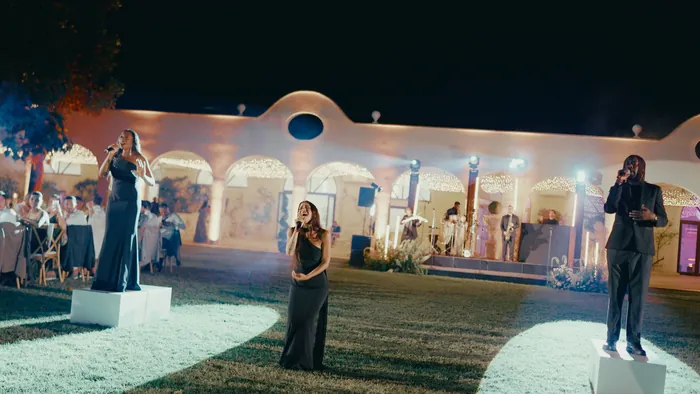 During dinner, the kitchen is in charge
When there is a dinner, the kitchen is the metronome of the evening. The number of courses and the pace of service determine how long the meal lasts and when there is room for music, and the program is written together with the caterer, course by course.
Short sets or staged performances fit in between courses; during service, the music stays at conversation level, so the servers can work and the guests can talk. If the kitchen falls behind, it is the music that adapts, with a set that stretches or shortens without anyone noticing.
Awards and speeches at the moment of peak attention
The moment when the audience listens most closely usually comes at the end of dinner, when guests have finished eating, are still seated and have not yet headed for the dance floor. That is the time to schedule awards, speeches and the moments the organizer cares about most, because later on attention drops and part of the room starts to leave.
Music frames these moments, with walk-on music for whoever goes up on stage, a short musical bridge between awards and a song that caps the final round of applause. To keep the energy up until the party, the artist opening it has to be ready to start as soon as the speeches end, with no changeover in between.
In front of an attentive room, it is easy for speakers to take a few extra minutes, so the length of each speech is agreed on in advance with the speaker, and the program leaves a buffer that the party can absorb without sacrificing its high point.
Changeovers between artists
While guests are eating and listening to the speeches, the least visible part of the program is taking shape behind the stage: the handoff from one artist to the next. Every changeover takes time to move instruments, connect them and check the sound, and a changeover without music drains the energy from the room more than any intentional pause.
Changeovers get shorter with shared backline, meaning amplifiers, drums and keyboards that stay on stage and serve several acts. The sound check is often done in reverse order, starting with whoever will play last, so that by the end of sound check the opening act’s gear is already set up on stage. Where a wait is unavoidable, a DJ covers the changeover and keeps the room moving until the next band is ready.
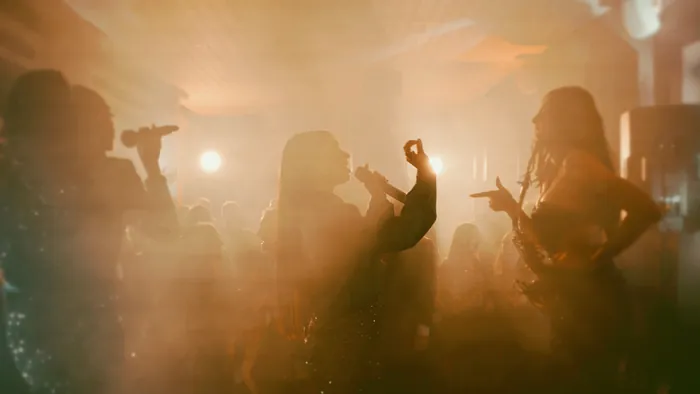 The party and the end time
A party needs a progression, with the energy rising set after set toward a high point. Where to place it depends on the end time, which is almost always set by the municipality or the venue.
For events in public places or open to the public, Italy’s framework law on noise pollution gives municipalities the authority to approve temporary events, including exemptions from noise limits. Among the conditions the municipality sets are the hours when music may be played, which vary from city to city. At a villa or a hotel, the end time is part of the package agreed on with the venue when the contract is signed, and the program takes it into account from the very first draft.
Working backward from that time, the party program places the high point far enough ahead of closing and lets the last song bring the evening to an unhurried end. Departures are part of the audience’s timeline too, because shuttles, taxis and the coat check need a few minutes, and farewell music sees guests all the way to the door.
Read also: Organizing a concert: the paperwork comes before the music
The program for your evening
Mikevents builds programs and lineups for festivals, concert series, and private and corporate events, starting with audience flow, safety, schedules and permitted volume levels. On site, we coordinate audio and lighting, manage the stage, the backline and show direction, and oversee the changeovers between artists so the room is never left without music.
If you are organizing an evening with several artists, tell us what time your guests will arrive, and we will build the rest of the program together from there. You can see our work on live events on our public concerts and events page.
Music event programs: frequently asked questions
What is the program of a music event?
The program of a music event is the schedule for the evening, setting the order and timing of the welcome, dinner, speeches, artist performances, the party and the close. It is built around the audience’s timeline and the constraints of the kitchen, the venue and the permits, and it also includes the changeovers between artists.
When should awards and speeches be scheduled at an evening with music?
At an evening with live music, awards and speeches work best at the end of dinner, when guests are still seated and before the party begins. That is when the room’s attention peaks; later on it drops, and part of the audience starts to leave. Music frames the walk-ons and the applause.
Who decides when the music has to end at an event?
For events in public places or open to the public, the time the music has to end is one of the conditions of the municipal permit, and in Italy the municipality can grant exemptions from noise limits for temporary events. At villas and hotels, the end time is agreed on with the venue when the contract is signed, and the party program is built backward from that time.