


Takeaways
- An event’s music rundown lists, entry by entry, the time, duration, moment, artists and songs, volume, and the cues for the music to come in and go out. It exists in a single version shared by the show caller, the lighting team, the emcee and the artists, and it is updated with every change to the program.
- Songs are timed using the version that will actually be played, and movements along the actual route, from the speaker’s walk to the stage to the changeovers between one act and the next. Transitions count as segments too, and key moments such as speeches, videos and reveals are synced to the second with timecode.
- A rundown filled minute by minute falls apart at the first delay, which is why a well-written one includes flexible segments that can stretch or shrink, and cut points decided in advance. Once the delay has been absorbed, the show caller returns to the rundown as written without touching the speeches, videos or reveals.
A corporate event’s music rundown is written by timing songs, walks and scene changes, so that every key moment lands on the exact second the room expects it
To write an event’s music rundown, you time everything, from the length of each song in the version that will be played to the seconds the CEO needs to reach the lectern, down to the time it takes the band to hand the stage over to the DJ. At a convention or a gala, the music unfolds alongside moments that each have their own length, and a stopwatch is the most reliable way to make it fit every one of them.
The program sets the order of the evening’s phases; the rundown translates them into minutes and seconds. It is the page the show caller, the lighting team, the emcee and the artists all work from, and anyone reading it can tell quickly whether it was written with a stopwatch in hand.
We start with a single entry, move on to durations and transitions, and finish with the margins that save the evening when something runs late.
Read also: A music event’s program is built around the audience’s schedule, not the artists’
What goes into each entry of the rundown
Each entry in the music rundown corresponds to a moment of the event and states its start time, its duration, what is happening in the room, who is playing and what, the volume, the cue that brings the music in and the one that takes it out, and the person who calls the cue. In artistic direction, this page is called a cue list, because every entry is a cue: an instruction someone has to carry out at a precise moment.
The rundown only works if there is a single version, shared by everyone who uses it. An emcee reading a copy from three days earlier announces a segment the show caller has already moved, and the sound engineer opens the wrong microphone. Every new version carries a number and a date, and the previous one is pulled from the lecterns, the consoles and front of house at the same time.
Every duration is timed using the version that will be played
In the rundown, a song’s duration is that of the version the artists will play on the night of the event. A live arrangement has its own intro, solos and ending, so each song is timed at rehearsal, from the first note to the final chord.
The same goes for people’s movements. The speaker’s walk from the front row to the lectern is timed at rehearsal along the actual route, stairs included, and the walk-on music is cut to fit. If the walk takes, say, twenty seconds, a song that ends after forty leaves the speaker standing in front of the audience, waiting for silence.
Videos have a fixed length, built into the file, and it is worth requesting them from the production team before rehearsals, so the music’s entrances and exits can be planned around them.
At galas with a dinner show, the timing that anchors all the others is the pace of the dinner service. The length of each course comes from the caterer, and the show’s acts are written around those times, each in the gap between one course and the next, so guests can watch the stage without their food going cold.
 Transitions take time too
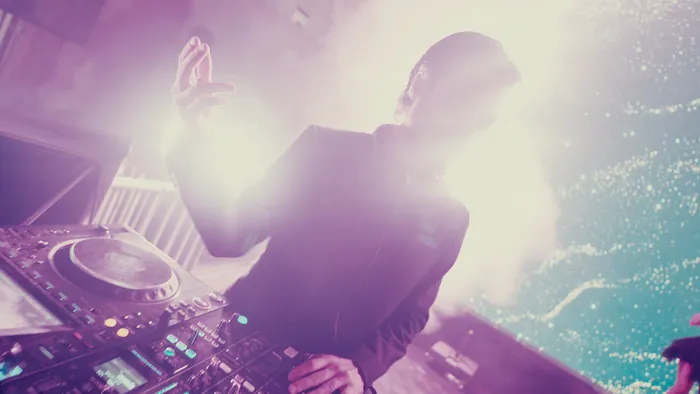
Between one segment of the rundown and the next come short transitions that take up time even when no one is playing. Every transition gets its own entry, with its own duration and cue, from the applause after a speech to the changeover between the band and the DJ to the emcee stepping back on stage.
The changeover is the moment when the room is most likely to fall silent. It is handled by overlapping the two acts, with the DJ starting from the booth over the band’s final chords, or by having a background set cover the minutes the technicians spend moving instruments and microphones.
At conventions, the switch from one speaker to the next is covered by musical stings that last only a few seconds and signal to the room that something new is about to begin.
 Key moments are synced to the second
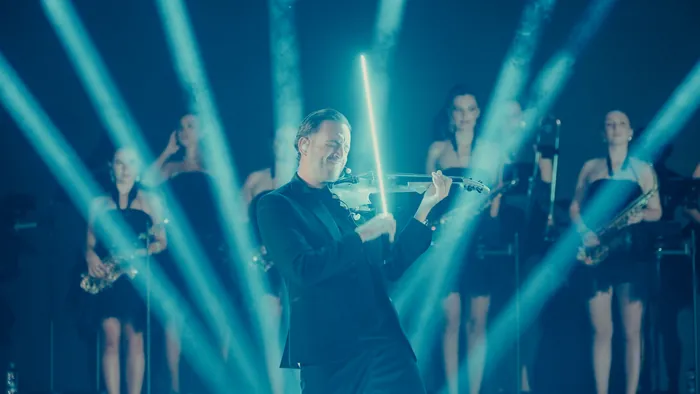
Speeches, videos and reveals are the moments the company wants people to remember, and in the rundown they are written to the second. When the CEO takes the stage, the walk-on music starts as the CEO’s name is announced and stops the instant the CEO reaches the lectern, so the first sound the room hears after the music is the CEO’s voice.
Videos and reveals rely on timecode, a signal that syncs music, lighting and effects to the same clock. Linked to that signal, the musical hit, the blackout and the image on the LED wall all fire together, and at rehearsal the sequence is run again to confirm that all three truly line up.
The dress rehearsal is run with the rundown in hand and the stopwatch running, in the actual order and with every transition, so that every written duration becomes a measured one. Anything that does not add up at rehearsal is corrected on paper before the doors open.
The margins that hold the rundown together
A rundown filled minute by minute falls apart at the first delay, which at an event can come from the dinner service or from a speaker who talks longer than planned. That is why it includes flexible segments, such as a set that can be extended by ten minutes or cut by five, and cut points decided in advance: songs the show caller can skip without the room noticing.
Once the delay has been absorbed, the show goes back to the rundown as written, and the key moments stay locked to the second they were set for. The emcee, the sound engineer and the lighting operator do not have to improvise anything, since every margin is already marked on the page in their hands.
Read also: Show direction is what separates a corporate convention from a conference
Your convention’s rundown, timed at rehearsal
At Mikevents, we write the rundown for a corporate event with a stopwatch in hand, from the first rehearsal with the artists to the version that reaches front of house on the night of the event. Alongside the rundown, we prepare the music script and the stage plan, and we link music, lighting and effects to the same timecode, working with the technical vendors and the venue.
Our work for conventions and galas is described on our artistic direction and production page. If the program for your event day is already written, send it to us and we will turn it into a first draft of the rundown, with durations we will time together during rehearsals.
Event music rundown: frequently asked questions
How do you write a music rundown for an event?
An event’s music rundown is written entry by entry, one for each moment, with the time, duration, artists and songs, volume, and the cues for the music to come in and go out. Durations are timed at rehearsal using the version that will be played, transitions count as segments, and key moments are synced to the second, with flexible margins left to absorb delays.
What should a music rundown include?
Each entry in a music rundown states the start time, the duration, what is happening in the room, who is playing and what, the volume, the cue that brings the music in and the one that takes it out, and the person who calls the cue. The rundown must exist in a single version, shared by the show caller, the lighting team, the emcee and the artists.
How do you handle delays in a music rundown?
Delays in a music rundown are handled with flexible segments, such as a set that can be extended or shortened by a few minutes, and with cut points decided in advance: songs the show caller can skip without the room noticing. That way the key moments (speeches, videos and reveals) stay locked to the second they were set for.